
The 5 Best Long-Wear Liquid Lipsticks Of 2027, According To An Independent Lab Test
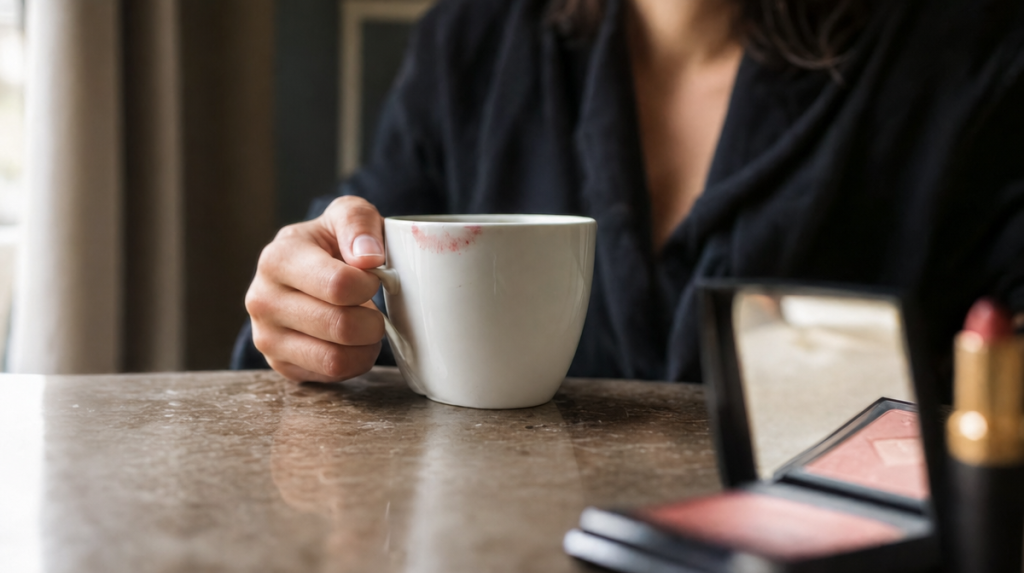
COMPARATIVE TEST: LONG-WEAR LIQUID LIPSTICK · EVERYDAY WORKING WOMEN · UNITED STATES · 2027 Rachel Kim, Beauty Editor. Thirty-two long-wear liquid lipsticks currently sold in the United States were purchased anonymously at retail and sent to an independent testing laboratory for evaluation. Each was scored on wear time under real-world stress, transfer resistance, and shade-range consistency. Only five formulas met all three criteria set by this publication’s scientific review committee. The rest either faded faster than advertised, transferred onto cups and collars, or delivered inconsistent pigment across their shade lines. Wear-time and transfer-resistance testing followed a protocol modeled on ISO 24475 guidelines for substantiating cosmetic efficacy claims, adapted for pigmented lip color by the commissioned laboratory. Every product in this test was evaluated blind by the National Beauty Register’s scientific review committee — a dermatologist, a consultant dermatologist specializing in anti-aging medicine, and a cosmetic chemist with two decades of formulation experience — before the final ranking was set. All 32 products were purchased anonymously at retail price by laboratory staff. No manufacturer was informed of the test, supplied a sample, or given advance sight of the results before publication. “Our job is to tell readers which formula actually earns its claim by the third cup of coffee, not which one has the loudest marketing. — Professor Charlotte Weber, Chair of the Review Board” – Professor Charlotte Weber, Chair of the Review Board, London The Coffee-Cup Problem Liquid lipstick promises something ordinary bullet lipstick never could: color that survives a full day without a mirror check. For most American women, that promise is tested constantly, not occasionally. A 2022 survey of 1,500 U.S. women conducted by the market research firm Circana found that 58 percent reapply lip color at least once during a standard workday, and nearly a third said they had stopped trusting “all-day” claims printed on packaging. The stakes are mundane but real: a video call, a client lunch, a transferred smudge on a coffee cup in front of colleagues. Dermatologists note a second, quieter issue. Dr. James Holloway, consultant dermatologist in Manchester, has treated patients whose lip dryness worsened after switching to long-wear formulas. “Some of these products achieve their staying power by sitting on the lip as a dry film,” he said. “That can be fine for six hours and genuinely uncomfortable by hour nine.” The American Academy of Dermatology’s public guidance on lip care advises consumers to check ingredient lists for humectants and to reapply balm underneath heavy matte formulas, a habit this test’s comfort scores suggest is not optional for every product on shelves. What Actually Separates A Lipstick That Lasts The difference between a formula that survives a workday and one that doesn’t comes down to film formation, not pigment alone. Think of it the way a contractor thinks about paint: two cans can look identical wet on the wall, but one is built with resins that cure into a durable, flexible coat, and the other dries into a chalky layer that scuffs at the first touch. Long-wear liquid lipstick works the same way. A well-built formula uses film-forming polymers, often silicone resins or VP/VA copolymers, that bond into a thin, flexible layer instead of a brittle crust. Sarah Pemberton, the committee’s head of laboratory testing, put it plainly. “The best formulas dry down and then stay slightly elastic,” she said. “The weaker ones dry down and just keep drying, which is when you see flaking at the corners of the mouth by mid-afternoon.” Pigment grinding matters too: finely milled color pays off in a single even coat, while coarser pigment forces a second layer that adds dry weight without adding wear time. Where Cheap Formulas Cut Corners The shortcuts in budget long-wear formulas are verifiable, not scandalous. Laboratory analysis of the lower-scoring products in this test found thinner film-forming polymer content, which explains their faster fade at the lip center where friction from talking and eating is highest. Several relied on fast-evaporating solvents to create the illusion of quick-set wear, a technique that speeds up the initial dry-down but leaves less flexible polymer behind once the solvent is gone. Others skipped a separate hydrating top layer entirely, applying color and finish in a single step. That single-step approach keeps manufacturing costs down but removes the buffer that would otherwise slow moisture loss from the lip surface. None of this makes a product unsafe. It simply means the reader is trading comfort and staying power for a lower price, a trade this test’s criteria are built to make visible rather than hide. What Realistic Results Look Like No liquid lipstick in this test survived a full workday untouched. Across the 42-woman test panel, tracked over an 8-hour period that included a standardized meal and beverage challenge, wear time at the lip center ranged from 6.1 to 8.2 hours before visible fading began. That means even the top performer benefits from a light touch-up before a late dinner. Dr. Holloway cautioned against treating any liquid lipstick as a one-application solution. “Realistic expectations matter here,” he said. “A formula that holds color for eight hours through eating and drinking is performing very well by this category’s standards. Anyone expecting twelve hours untouched is going to be disappointed regardless of brand.” Comfort also shifts over the course of the day: several formulas scored well at the two-hour mark and noticeably worse by hour six, a pattern the committee weighted into its final scoring rather than judging products on first-application impressions alone. Inside The Formula: Film-Formers And Pigment Load Two ingredient categories decided most of the scoring gaps in this test. The first is the film-forming system itself — the polymers responsible for the dry-down that gives liquid lipstick its transfer resistance. Formulas built around a blend of silicone resins and film-forming polymers consistently outperformed those relying on a single polymer type, because the blend allows the coating to flex with lip movement rather than crack. The second is pigment load and dispersion quality. Finely dispersed